Nail Trimming for Cats: A Comprehensive Guide to Keeping Your Feline’s Claws Healthy
Nail trimming is an essential part of your cat’s grooming routine, yet it is often overlooked by pet owners. Regularly maintaining your cat’s claws not only promotes their health but also ensures a safe and comfortable environment for both your furry friend and your home. This guide will delve into the importance of nail trimming, the right techniques, and helpful tips to make the process as smooth and stress-free as possible.
The Importance of Nail Trimming
1. Preventing Health Issues
Overgrown nails can lead to a variety of health problems for your cat, including:
- Pain and Discomfort: Long nails can curl and grow into the paw pads, causing pain and potential infections.
- Mobility Issues: Cats with excessively long nails may have difficulty walking or jumping, impacting their overall mobility and quality of life.
- Injury Risks: Overgrown nails can easily snag on surfaces, leading to painful tears or breaks.
2. Protecting Your Home
Cats naturally scratch to maintain their claws, but when their nails are too long, they can cause unwanted damage to furniture, carpets, and other household items. Regular trimming helps reduce the risk of costly repairs and keeps your home looking its best.
3. Enhancing Comfort
Trimmed nails help ensure that your cat can walk, play, and climb comfortably. Regular nail care contributes to their overall well-being, allowing them to engage in their favorite activities without discomfort.
Tools You’ll Need
Before you begin trimming your cat’s nails, gather the necessary tools to make the process efficient and safe:
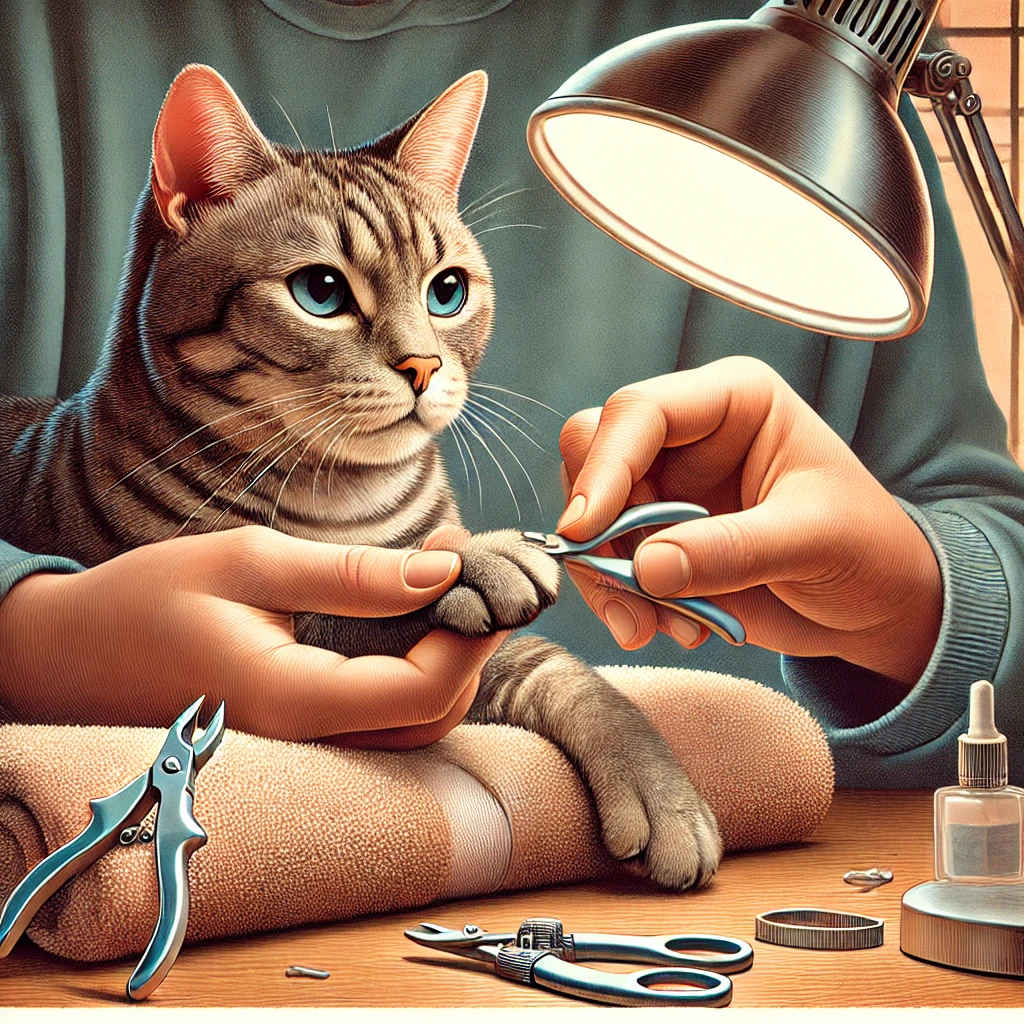
- Cat Nail Clippers: There are various types available, including scissor-style, guillotine-style, and electric grinders. Choose the one that feels most comfortable for you.
- Styptic Powder: This is useful in case you accidentally cut too close to the quick (the sensitive part of the nail that contains blood vessels). Styptic powder helps stop bleeding quickly.
- Treats: Having treats on hand can help reward your cat for their cooperation and make the experience more positive.
Preparing for Nail Trimming
1. Choose the Right Time and Place
Select a quiet, comfortable space free from distractions. Choose a time when your cat is calm, such as after a meal or playtime, to ensure they are more receptive to the process.
2. Get Your Cat Comfortable
- Familiarization: Allow your cat to sniff and explore the clippers beforehand. This will help reduce any anxiety they may feel.
- Positioning: Gently hold your cat in your lap or on a stable surface. You can wrap them in a towel, leaving one paw out, to help them feel secure.
3. Calm Your Cat
Use a calm, soothing voice throughout the process. If your cat seems anxious, take a break and try again later. Patience is key!
Step-by-Step Nail Trimming Technique
- Extend the Claw: Gently press the paw pad to extend the claw. This will give you a clear view of the nail and the quick.
- Identify the Quick: The quick is the pink area within the nail. Avoid cutting into the quick, as this can cause bleeding and pain. If your cat has dark nails, trim only the sharp tip and avoid the areas that appear darker.
- Trim the Nail: Using your chosen nail clippers, carefully trim the tip of the nail. Make quick, smooth cuts to minimize any discomfort. It’s better to trim a little at a time than to risk cutting too close.
- Check Each Paw: Repeat the process for each paw, taking breaks as needed. Be mindful of your cat’s comfort level and adjust accordingly.
- Reward Your Cat: After each session, reward your cat with treats and affection. This positive reinforcement will help them associate nail trimming with a pleasant experience.
Tips for a Stress-Free Experience
- Regular Trimming: Aim to trim your cat’s nails every 2-4 weeks. Regular maintenance makes the process easier and helps keep their nails healthy.
- Use a Helper: If your cat is particularly squirmy, consider having a friend assist you by holding and soothing the cat while you trim.
- Take Your Time: Don’t rush the process. If your cat becomes anxious or fidgety, take a break and try again later.
- Consider Professional Help: If you’re uncomfortable trimming your cat’s nails or if your cat is overly aggressive, don’t hesitate to seek assistance from a professional groomer or veterinarian.
Signs of Stress in Cats
While trimming nails, be vigilant for signs of stress or discomfort in your cat, which may include:
- Hissing or growling
- Trying to escape
- Tensing or stiffening their body
- Swatting or scratching
If you notice any of these behaviors, stop the session immediately and try again later.
Conclusion
Nail trimming is an essential part of maintaining your cat’s health and comfort. By understanding the importance of regular nail care and using the right techniques, you can keep your feline friend’s claws healthy while fostering a positive grooming experience. With patience, practice, and plenty of treats, you and your cat can navigate nail trimming with ease. Remember, a well-groomed cat is a happy cat!

You May Also Like
How to Fix Severely Matted Cat Hair
Dealing with Matted Fur Cats: A Comprehensive Guide for Cat Owners