Grooming Small Animals: Hamsters
Hamsters, though small and low-maintenance, benefit greatly from regular grooming to maintain their health and happiness. Grooming them requires a careful approach because of their delicate size, particular grooming needs, and sensitivity to stress. Here’s a guide to handling all aspects of hamster grooming with confidence.
1. Importance of Grooming for Hamsters
Grooming not only keeps hamsters clean but also strengthens their bond with their owners. Regular grooming sessions can prevent health issues by allowing pet owners to detect any signs of illness, parasites, or skin problems early. It’s also a way to provide essential care for breeds with specific grooming needs, like long-haired hamsters.
2. Basic Grooming Requirements
Hamsters usually handle much of their own grooming, as they are naturally clean animals. However, owners can assist in cases where grooming is difficult for the hamster, such as for elderly or long-haired breeds.
- Self-Cleaning: Most hamsters groom themselves regularly, using their paws to wash their faces and bodies. Owners should avoid bathing hamsters with water, as this can strip their fur of natural oils and stress them.
- Sand Baths: Hamsters can use a fine, dust-free sand bath to help remove excess oils and debris from their coats. Sand baths are especially popular with Syrian hamsters, which enjoy rolling in the sand.
- Regular Brushing: For long-haired breeds like Syrian hamsters, gentle brushing with a soft toothbrush or a hamster-safe brush can help reduce tangling and matting.
3. Step-by-Step Grooming Guide
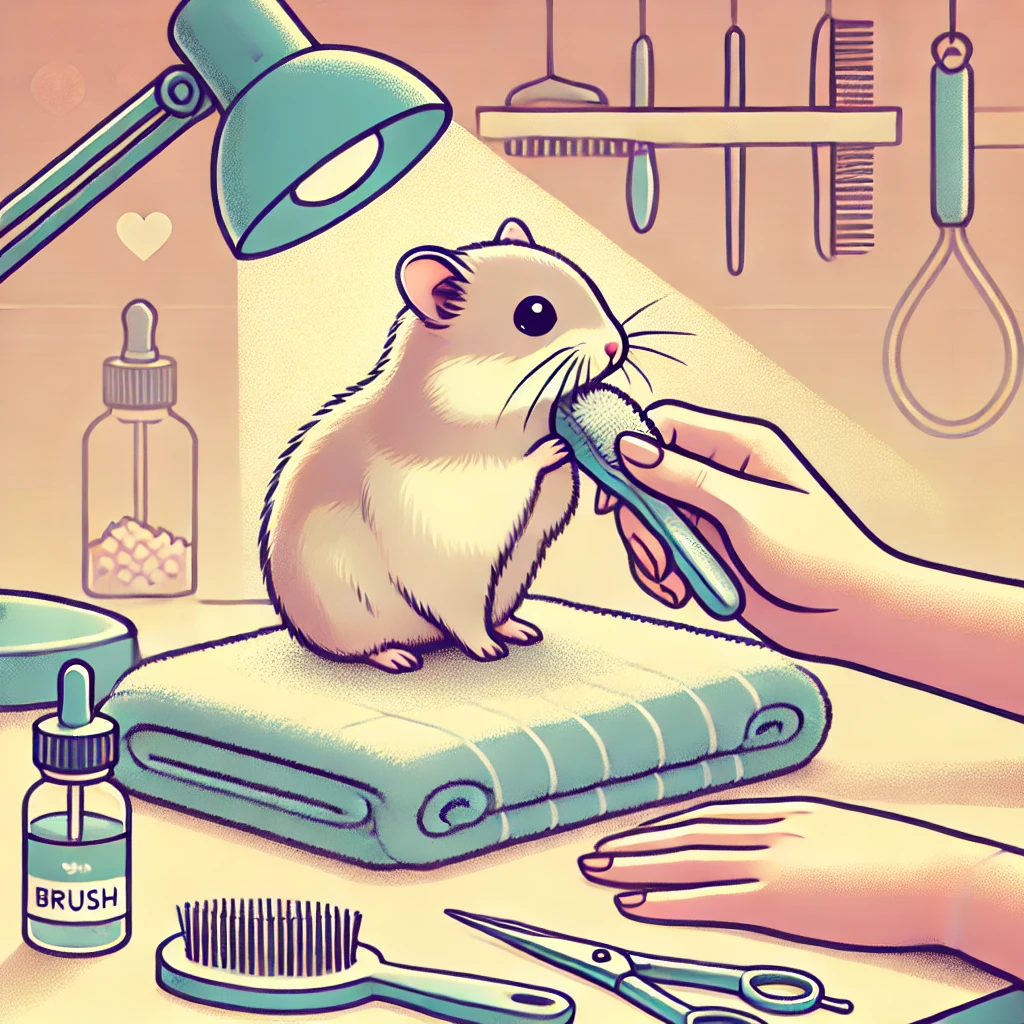
Preparing the Grooming Area
Create a quiet, well-lit, and calm environment to avoid startling your hamster. Use a towel-lined table to give the hamster a stable, comfortable area.
1. Brushing the Fur
- Gently hold your hamster in a comfortable position and start by using a soft brush to go through its fur. Brushing removes loose hairs, dirt, and any tangles, especially for long-haired hamsters.
- Be extra gentle around sensitive areas, such as the face and belly.
2. Clipping Nails (If Necessary)
- While most hamsters naturally wear down their nails, older or less active ones might need nail trims. Use small, pet-safe nail clippers and only trim the tips to avoid causing pain or injury.
3. Teeth Care
- Hamsters’ teeth grow continuously, so providing safe chew toys and foods is essential to help them wear down their teeth naturally. Avoid handling the teeth directly; instead, monitor for any signs of overgrowth.
4. Common Grooming Challenges
Dealing with Mats and Tangles
For long-haired hamsters, mats can form, especially around the hindquarters. Use a soft-bristled brush or your fingers to gently work out the mats, being cautious not to pull or tear the fur.
Addressing Dirty Fur
Avoid water baths. If absolutely necessary, use a slightly damp cloth to wipe away any dirt, then dry the area promptly to prevent chilling.
5. Signs of Health Issues During Grooming
Regular grooming sessions are excellent opportunities to check for any abnormalities:
- Skin Conditions: Look for redness, dryness, or flakiness, which may indicate skin irritation or allergies.
- Parasites: Although uncommon, check for mites or fleas if your hamster seems excessively itchy.
- Weight and Muscle Tone: Notice any significant weight loss or gain, as hamsters are prone to obesity.
Conclusion
Grooming your hamster is an important aspect of pet care that allows you to keep a close watch on their health while also building a trusting relationship. With a gentle approach and consistent grooming routines, you’ll ensure your small companion stays comfortable and healthy.


You May Also Like