How to Avoid Injuries While Grooming Pets
Grooming pets can be a rewarding but challenging task, as it involves handling animals that may be anxious, uncooperative, or sensitive to touch. To avoid injuries to both the groomer and the pet, it’s essential to follow best practices and use appropriate tools and techniques.
1. Proper Restraint
The first and most important step to preventing injuries during grooming is ensuring that the pet is properly restrained. A grooming harness or table with secure restraints can keep the pet stable, reducing the risk of sudden movements that might lead to accidental cuts or nicks. Make sure the restraints are not too tight, as this could cause discomfort or injury.
2. Use the Right Tools
Using the correct tools is vital for safe grooming. Sharp, high-quality clippers, scissors, and brushes can make the process smoother and quicker. Dull blades can tug on a pet’s fur, causing pain or skin irritation, which may lead to a more stressed and potentially aggressive animal. Always check your tools before use and maintain them regularly.
3. Be Mindful of Sensitive Areas
Certain parts of a pet’s body are more sensitive than others, such as the ears, eyes, and belly. When working on these areas, take extra care and use tools specifically designed for sensitive regions. Avoid pulling on the fur too hard or applying too much pressure with clippers and scissors.
4. Handle the Animal with Care
Handling pets with care and gentleness is key to avoiding stress, which can lead to defensive actions like biting or scratching. Use calming techniques, such as speaking softly or taking breaks if the animal seems agitated. For pets known to be nervous or aggressive, consider working with a second person who can help calm the pet or gently hold them.
5. Monitor the Pet’s Behavior
Always watch the pet’s behavior during grooming. If a dog or cat starts to growl, hiss, or exhibit other signs of discomfort or aggression, it’s crucial to stop and assess the situation. Continuing when the animal is stressed can lead to injury for both you and the pet. It’s better to take a break, allow the pet to calm down, and then proceed slowly.
6. Maintain a Clean and Organized Workspace
A clean, organized workspace helps minimize accidents. Ensure that all tools are within reach but not scattered, as this can lead to tripping or knocking something over. Clean up fur, dirt, or debris to prevent slipping, and disinfect surfaces regularly to maintain a hygienic environment for both the groomer and the pet.
7. Wear Protective Gear
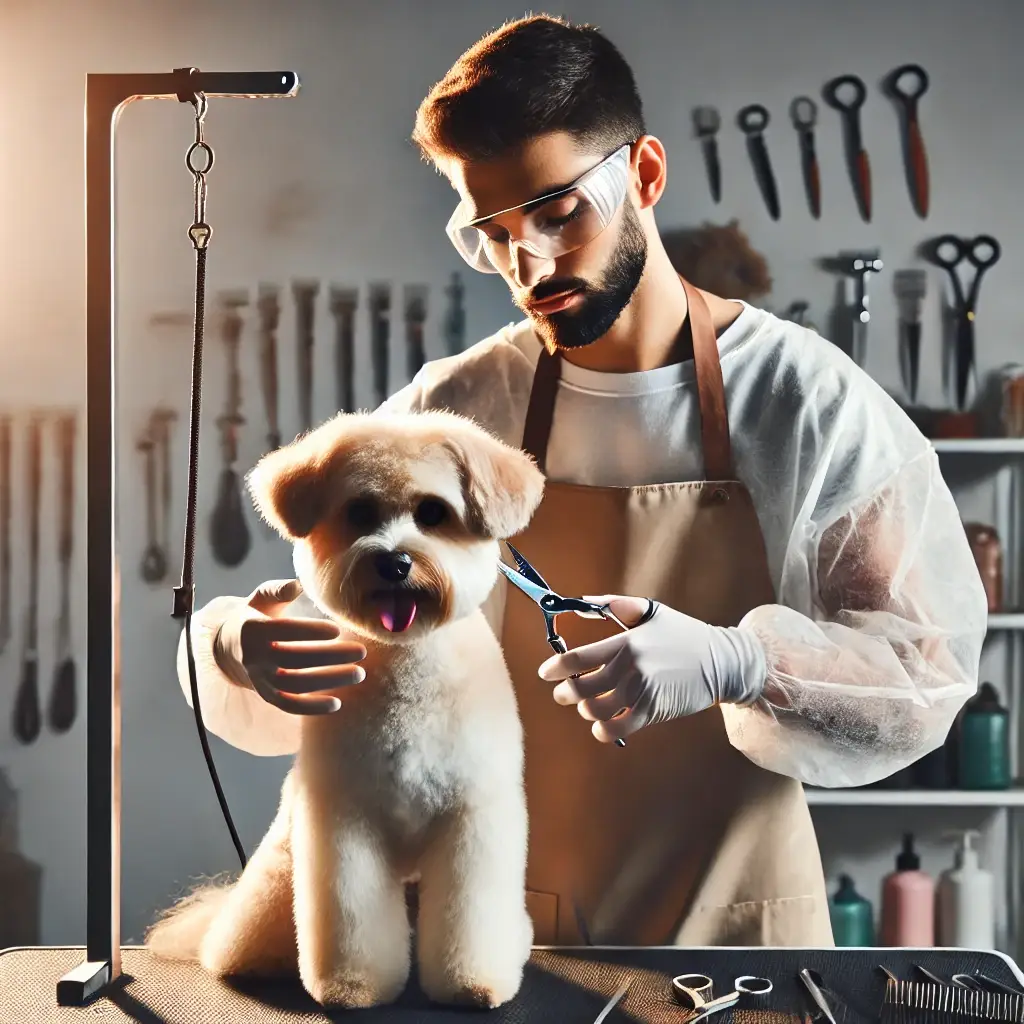
Groomers should always wear appropriate protective gear, including gloves and, if necessary, a grooming apron. Gloves can prevent scratches or bites, especially when dealing with difficult animals. Some groomers also wear face shields or safety goggles when using high-powered dryers or clippers to protect their eyes from flying debris.
8. Know Pet First Aid
Despite all precautions, accidents can happen. Being knowledgeable in basic pet first aid is essential in case of minor injuries like cuts or abrasions. Having a first aid kit handy with bandages, antiseptic solutions, and styptic powder (to stop bleeding) can help you respond quickly if something goes wrong.
9. Communicate with Pet Owners
Before starting any grooming session, communicate with the pet’s owner about any behavioral issues or health problems that might impact the grooming process. For example, if the pet has arthritis or is recovering from an injury, certain areas might be painful to touch. Knowing these details in advance allows you to take extra precautions and avoid hurting the animal.
10. Training and Experience
Lastly, grooming pets safely comes with experience. If you’re new to grooming, take the time to learn about the different behaviors and temperaments of various breeds. Practicing good techniques and handling skills will make the grooming process safer and more enjoyable for both you and the pets you work with.
By following these best practices and safety tips, you can significantly reduce the risk of injuries while grooming, ensuring a positive experience for both the pet and the groomer.
Conclusion
Maintaining safety while grooming pets is crucial for preventing injuries to both the animals and the groomers. By using appropriate tools, handling pets with care, and being mindful of their behavior, you can ensure that grooming sessions are smooth and safe. Additionally, having knowledge of pet first aid and keeping a clean workspace further minimizes risks. Good communication with pet owners and a calm, organized approach will contribute to a safer, stress-free grooming experience. Grooming isn’t just about appearance but also involves the well-being and comfort of pets, so attention to safety makes the entire process beneficial for everyone involved.